Explorations
May 5, 2025
Let's Play: Tennis
A Render Exploration in Cinema 4D 2026.1 + Redshift
Explorations
May 5, 2025
Let's Play: Tennis
A Render Exploration in Cinema 4D 2026.1 + Redshift
Introduction
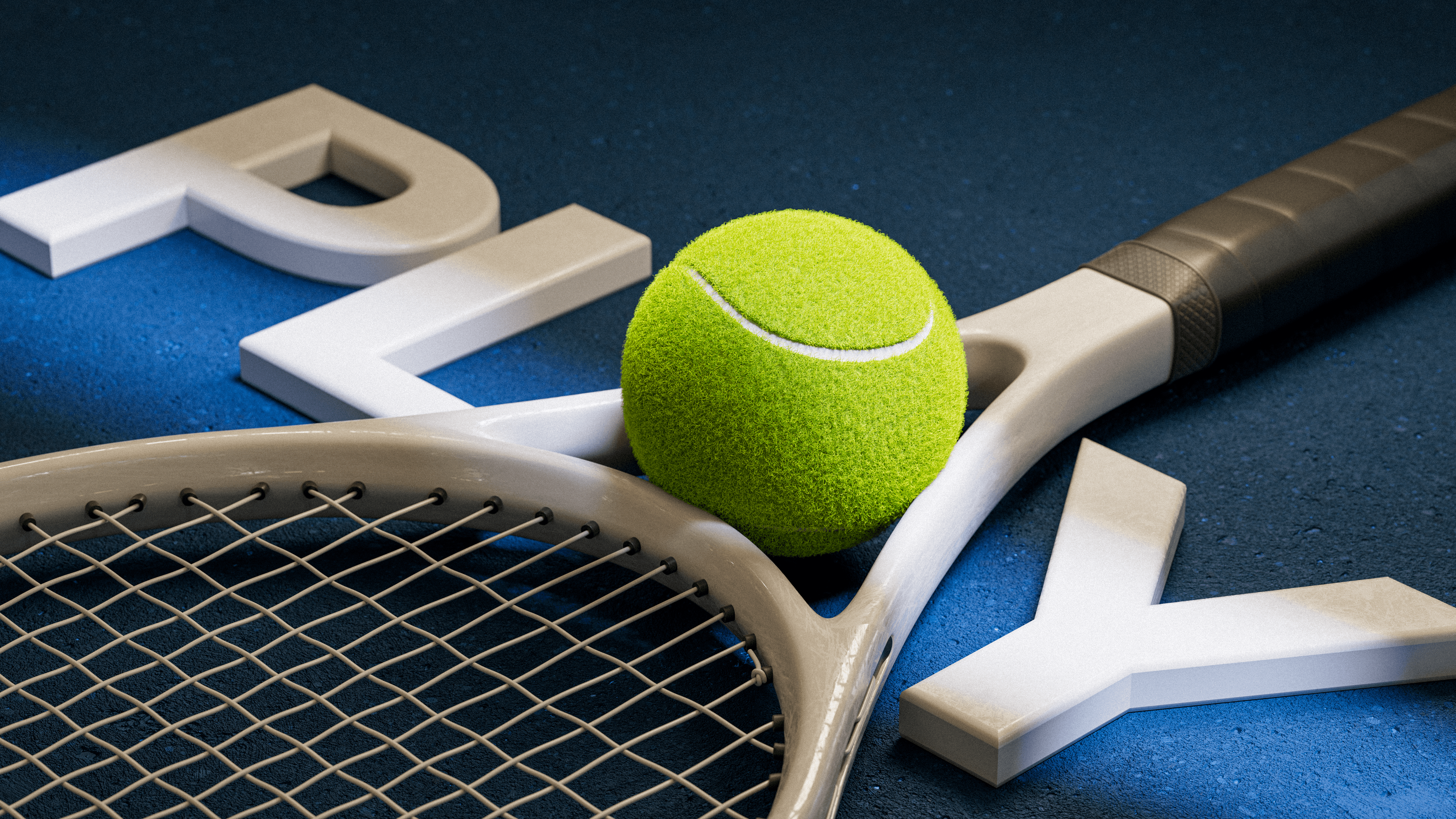
This Let’s Play: Tennis piece started as a simple visual study, an exploration of material contrast, form, and playful composition rather than a narrative-heavy concept. The goal was to take a familiar object set and elevate it through lighting, texture, and controlled minimalism.
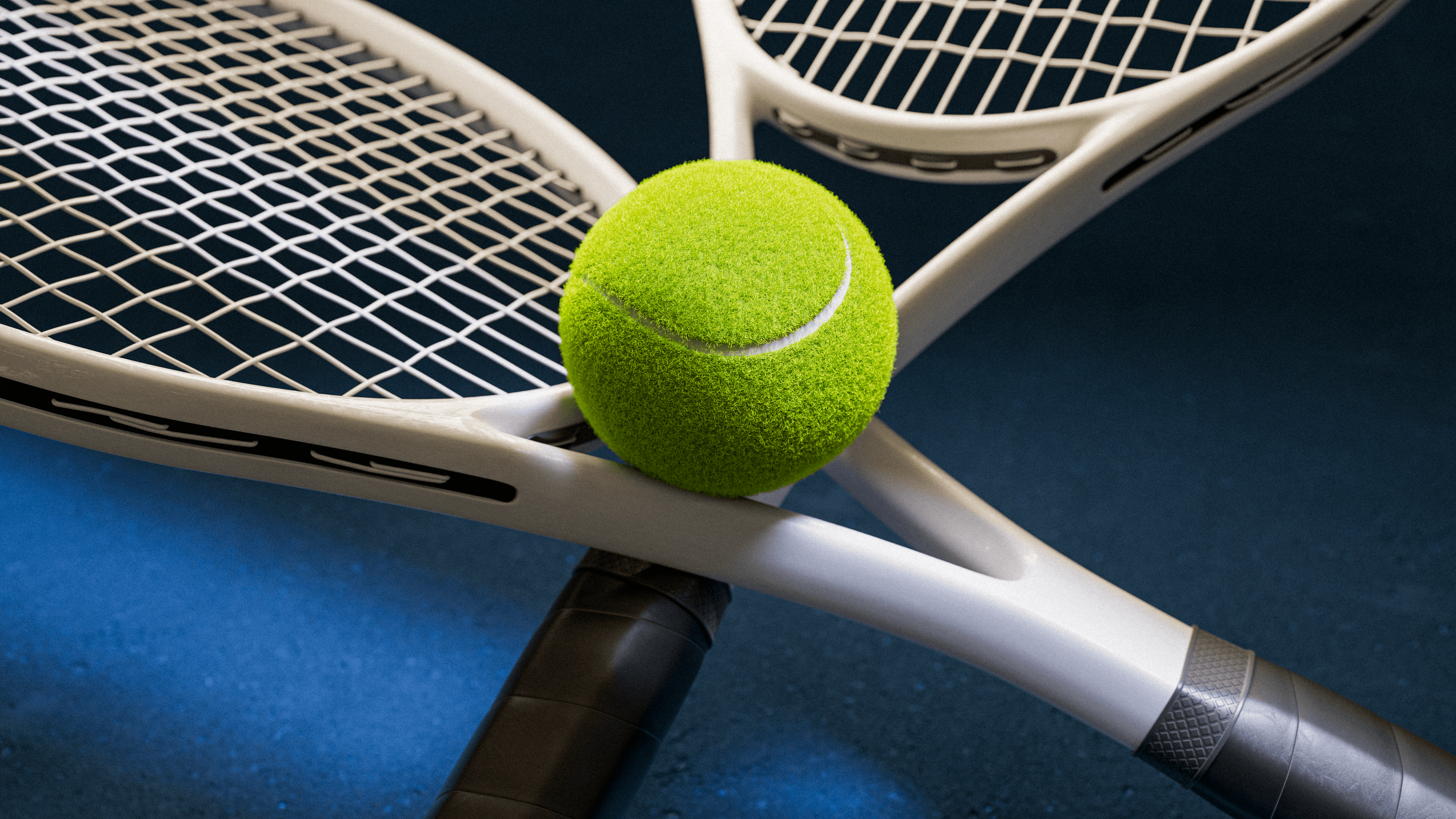
The tennis ball became the anchor of the composition. Its soft, fibrous surface contrasts against the clean, engineered geometry of the racket and typography, creating a balance between organic and manufactured forms. By keeping the scene intentionally restrained, every detail had room to breathe.
Visual Direction & Composition
The layout was designed to feel bold but uncluttered. Large typography sits directly in the environment, grounding the scene and reinforcing the “Let’s Play” theme without overwhelming the subject. Tight framing and shallow perspective help guide the eye naturally across the ball, strings, and letterforms.
Key visual choices included:
◉ Strong color separation between the neon green ball and the cool blue surface
◉ Soft directional lighting to enhance texture without harsh highlights
◉ Clean, modern framing that feels editorial rather than illustrative
The result is a series of renders that feel tactile and intentional, inviting the viewer to slow down and notice surface detail and light interaction.
Materials, Lighting, and Rendering
The scene was built and rendered in Cinema 4D 2026.1 using Redshift, taking advantage of its predictable lighting workflow and material control.
Material work focused heavily on realism through restraint:
◉ Subtle roughness variation on the tennis ball to avoid uniform shading
◉ Controlled specular response on the racket frame for a slightly worn, believable finish
◉ Soft shadow falloff to preserve depth without crushing detail
Lighting was kept minimal, using a primary key light to shape the scene and gentle fill to retain readability. Nothing flashy, just enough to let the materials do the work.

Post Production Touches
Post processing was intentionally light and handled in Photoshop. The goal wasn’t to reinvent the render, only to enhance what was already there.
Final adjustments included:
◉ Minor clarity and contrast tweaks
◉ Slight color enhancement to push the vibrancy of the tennis ball
◉ Gentle tonal balance to maintain consistency across the image set
No heavy compositing or stylized effects, just subtle refinements to polish the final output.


Conclusion
Let’s Play: Tennis is a reminder that strong visuals don’t always need complexity. Sometimes it’s about choosing a clear subject, giving materials the attention they deserve, and letting lighting and composition carry the piece.
This exploration was less about storytelling and more about craft. A focused study in texture, balance, and restraint, executed with tools that make that level of control enjoyable.
More explorations like this to come.
Stay Inspired
Get fresh design insights, articles, and resources delivered straight to your inbox.
Latest Blogs

Stay Inspired
Get fresh design insights, articles, and resources delivered straight to your inbox.
Explorations
May 5, 2025
Let's Play: Tennis
A Render Exploration in Cinema 4D 2026.1 + Redshift
Explorations
May 5, 2025
Let's Play: Tennis
A Render Exploration in Cinema 4D 2026.1 + Redshift
Introduction
This Let’s Play: Tennis piece started as a simple visual study, an exploration of material contrast, form, and playful composition rather than a narrative-heavy concept. The goal was to take a familiar object set and elevate it through lighting, texture, and controlled minimalism.
The tennis ball became the anchor of the composition. Its soft, fibrous surface contrasts against the clean, engineered geometry of the racket and typography, creating a balance between organic and manufactured forms. By keeping the scene intentionally restrained, every detail had room to breathe.
Visual Direction & Composition
The layout was designed to feel bold but uncluttered. Large typography sits directly in the environment, grounding the scene and reinforcing the “Let’s Play” theme without overwhelming the subject. Tight framing and shallow perspective help guide the eye naturally across the ball, strings, and letterforms.
Key visual choices included:
◉ Strong color separation between the neon green ball and the cool blue surface
◉ Soft directional lighting to enhance texture without harsh highlights
◉ Clean, modern framing that feels editorial rather than illustrative
The result is a series of renders that feel tactile and intentional, inviting the viewer to slow down and notice surface detail and light interaction.
Materials, Lighting, and Rendering
The scene was built and rendered in Cinema 4D 2026.1 using Redshift, taking advantage of its predictable lighting workflow and material control.
Material work focused heavily on realism through restraint:
◉ Subtle roughness variation on the tennis ball to avoid uniform shading
◉ Controlled specular response on the racket frame for a slightly worn, believable finish
◉ Soft shadow falloff to preserve depth without crushing detail
Lighting was kept minimal, using a primary key light to shape the scene and gentle fill to retain readability. Nothing flashy, just enough to let the materials do the work.
Post Production Touches
Post processing was intentionally light and handled in Photoshop. The goal wasn’t to reinvent the render, only to enhance what was already there.
Final adjustments included:
◉ Minor clarity and contrast tweaks
◉ Slight color enhancement to push the vibrancy of the tennis ball
◉ Gentle tonal balance to maintain consistency across the image set
No heavy compositing or stylized effects, just subtle refinements to polish the final output.
Conclusion
Let’s Play: Tennis is a reminder that strong visuals don’t always need complexity. Sometimes it’s about choosing a clear subject, giving materials the attention they deserve, and letting lighting and composition carry the piece.
This exploration was less about storytelling and more about craft. A focused study in texture, balance, and restraint, executed with tools that make that level of control enjoyable.
More explorations like this to come.
Stay Inspired
Get fresh design insights, articles, and resources delivered straight to your inbox.
Latest Blogs
Stay Inspired
Get fresh design insights, articles, and resources delivered straight to your inbox.
Explorations
May 5, 2025
Let's Play: Tennis
A Render Exploration in Cinema 4D 2026.1 + Redshift
Explorations
May 5, 2025
Let's Play: Tennis
A Render Exploration in Cinema 4D 2026.1 + Redshift
Introduction
This Let’s Play: Tennis piece started as a simple visual study, an exploration of material contrast, form, and playful composition rather than a narrative-heavy concept. The goal was to take a familiar object set and elevate it through lighting, texture, and controlled minimalism.
The tennis ball became the anchor of the composition. Its soft, fibrous surface contrasts against the clean, engineered geometry of the racket and typography, creating a balance between organic and manufactured forms. By keeping the scene intentionally restrained, every detail had room to breathe.
Visual Direction & Composition
The layout was designed to feel bold but uncluttered. Large typography sits directly in the environment, grounding the scene and reinforcing the “Let’s Play” theme without overwhelming the subject. Tight framing and shallow perspective help guide the eye naturally across the ball, strings, and letterforms.
Key visual choices included:
◉ Strong color separation between the neon green ball and the cool blue surface
◉ Soft directional lighting to enhance texture without harsh highlights
◉ Clean, modern framing that feels editorial rather than illustrative
The result is a series of renders that feel tactile and intentional, inviting the viewer to slow down and notice surface detail and light interaction.
Materials, Lighting, and Rendering
The scene was built and rendered in Cinema 4D 2026.1 using Redshift, taking advantage of its predictable lighting workflow and material control.
Material work focused heavily on realism through restraint:
◉ Subtle roughness variation on the tennis ball to avoid uniform shading
◉ Controlled specular response on the racket frame for a slightly worn, believable finish
◉ Soft shadow falloff to preserve depth without crushing detail
Lighting was kept minimal, using a primary key light to shape the scene and gentle fill to retain readability. Nothing flashy, just enough to let the materials do the work.
Post Production Touches
Post processing was intentionally light and handled in Photoshop. The goal wasn’t to reinvent the render, only to enhance what was already there.
Final adjustments included:
◉ Minor clarity and contrast tweaks
◉ Slight color enhancement to push the vibrancy of the tennis ball
◉ Gentle tonal balance to maintain consistency across the image set
No heavy compositing or stylized effects, just subtle refinements to polish the final output.
Conclusion
Let’s Play: Tennis is a reminder that strong visuals don’t always need complexity. Sometimes it’s about choosing a clear subject, giving materials the attention they deserve, and letting lighting and composition carry the piece.
This exploration was less about storytelling and more about craft. A focused study in texture, balance, and restraint, executed with tools that make that level of control enjoyable.
More explorations like this to come.
Stay Inspired
Get fresh design insights, articles, and resources delivered straight to your inbox.
Latest Blogs
Stay Inspired
Get fresh design insights, articles, and resources delivered straight to your inbox.